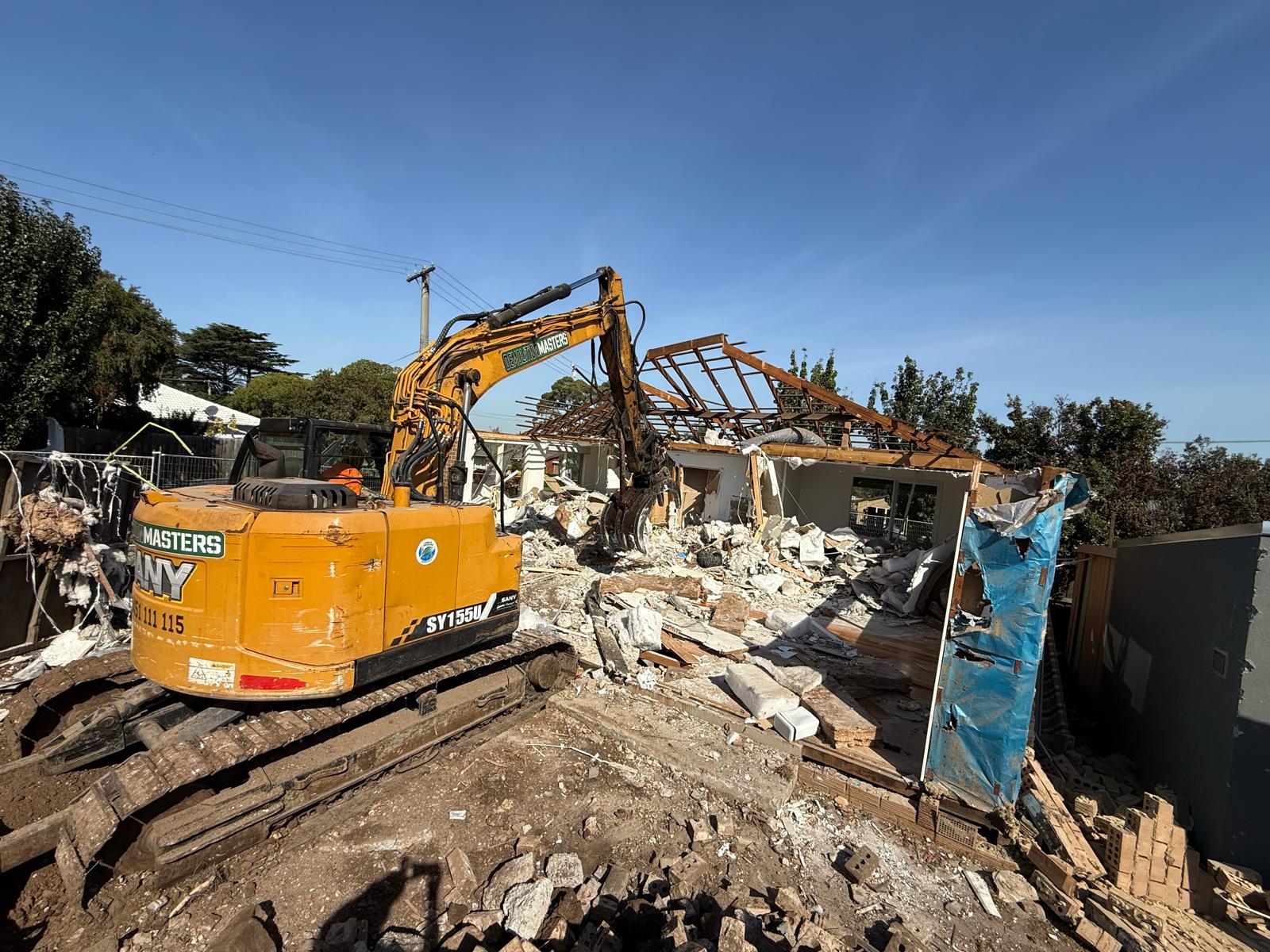
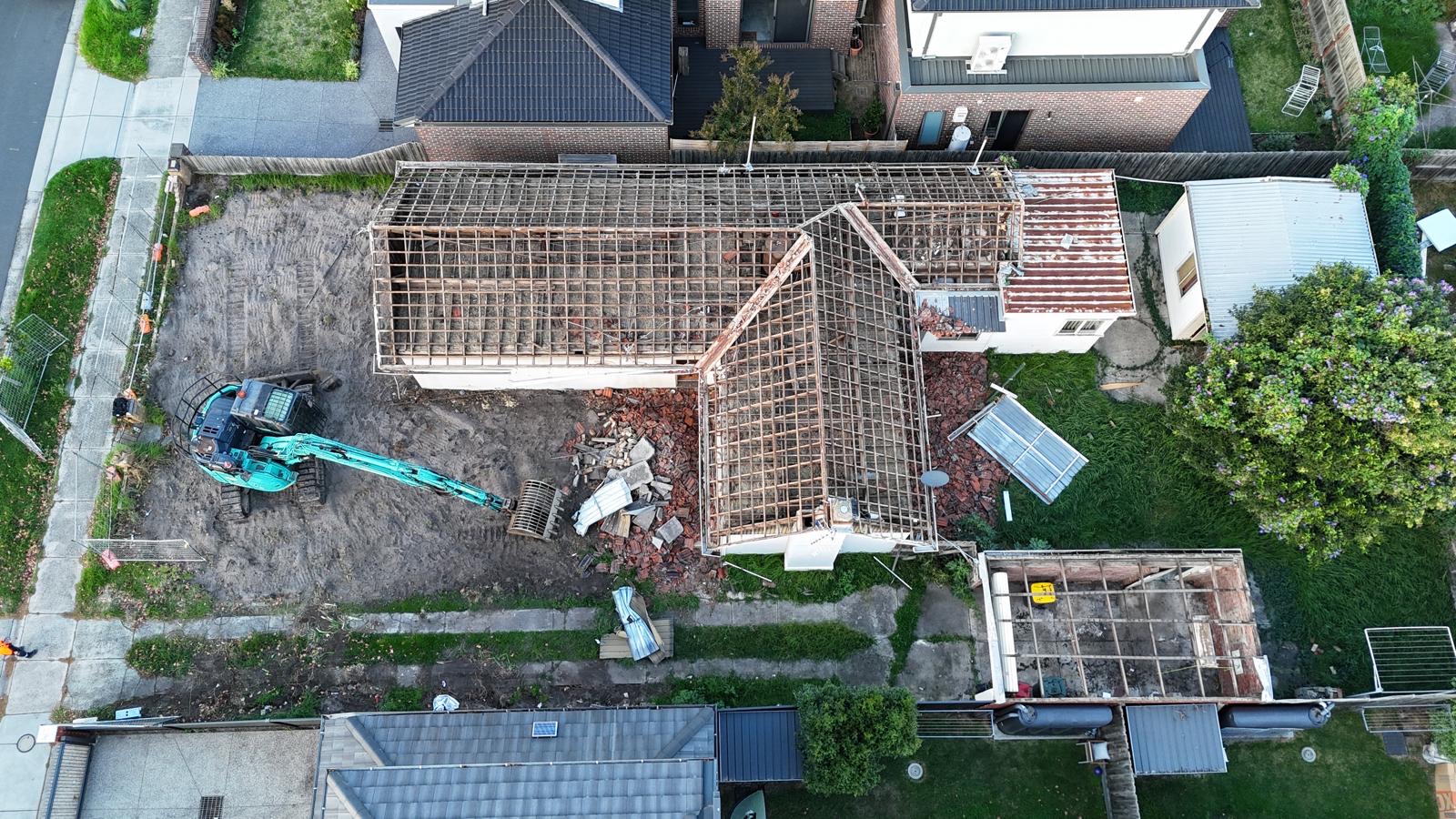
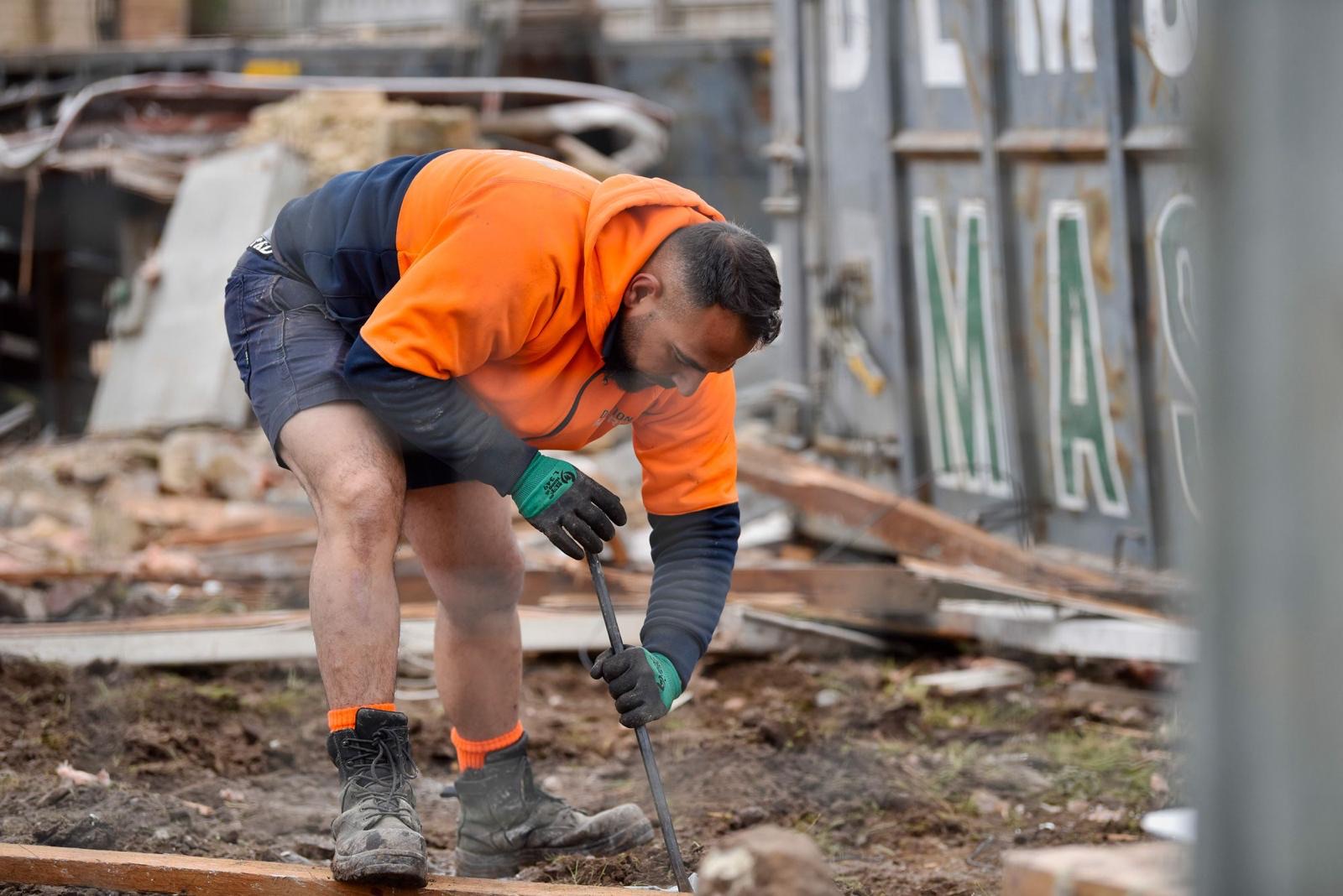
A knockdown rebuild gives you a brand-new home on a piece of land you already love, often for less total cost than buying-and-renovating an old one. The demolition portion of that project is its own contract — usually separate from the build contract — and getting it right has a bigger effect on the rebuild timeline than most homeowners realise. Here is what to budget, what to expect, and the timing pieces that protect your build start date.
The demolition slice of a Melbourne knockdown rebuild
For a typical residential knockdown rebuild in greater Melbourne in 2026, the demolition phase usually represents 4–8% of the total project budget. On a $750,000 rebuild, that is roughly $20,000–$45,000 of demolition. The wide spread reflects the same factors covered in our main demolition cost guide: building material, asbestos, access, and site complexity.
For comparison:
| Total rebuild budget | Typical demolition spend |
|---|---|
| $500K rebuild | $15,000 – $30,000 |
| $750K rebuild | $18,000 – $40,000 |
| $1M+ rebuild | $22,000 – $55,000 |
| Heritage / facade retention | $30,000 – $80,000+ |
Why demolition is usually a separate contract
Most volume builders treat demolition as a "preliminary" item — they will arrange a contractor for you and pass the cost through, sometimes with a small margin attached. You are not obligated to use the builder's preferred demolition contractor. In fact, getting one or two independent quotes nearly always saves money or improves scope, and it protects you against the rebuild timeline being held hostage to the builder's preferred crew.
The cleanest approach:
- Sign your build contract with demolition listed as a Provisional Sum or excluded entirely
- Tender the demolition independently to two or three licensed Melbourne contractors
- Award the demolition contract to whoever combines best price, scope, and credible programme
- Coordinate the start dates so the demolition completes before the slab pour is scheduled
The timeline coordination problem
Knockdown rebuild builders typically need a clear, level, rebuild-ready site delivered on a specific date — usually because their slab pour and trade roster is already locked in. If the demolition runs late, the entire build slides, sometimes by weeks, because the next available slab slot is already booked.
From the day you sign a demolition contract, expect roughly:
- 3–6 weeks for permits, asset protection bond, asbestos survey, and service disconnections
- 1–4 weeks on site for the demolition itself
- 3–7 days for final site clearance, level certification, and handover
Total: typically 6–12 weeks from contract signing to rebuild-ready handover. Heritage works or complex sites can extend further. Detailed timeline breakdown here.
Work backwards from your builder's slab pour date. If the build crew is locked in for week 14, the demolition handover needs to be week 13 at the latest. Sign the demolition contract no later than week 1.
What's usually NOT in the build contract
When checking your builder's contract, the demolition phase typically excludes:
- Asbestos removal beyond a small allowance
- Asset protection bond costs
- Service disconnection fees (gas, water, electricity, NBN)
- Council demolition permit fees
- Tree protection or arborist sign-off
- Heritage permit work where applicable
- Site soil contamination remediation
- Pool removal
Each of these can be allocated to the demolition contractor instead. Make sure both contracts agree on who is responsible for what — gaps are where variations grow.
Insurance and finance during demolition
Two practical points homeowners often miss:
Insurance gaps
Standard home insurance policies often don't cover an empty site. From the day demolition starts, you may need a vacant land or construction policy. Talk to your insurer before any work begins.
Land tax timing
If demolition straddles a land tax assessment date, you may end up paying land tax on the cleared land (which is taxed differently from the home you used to live in). Plan timing accordingly if it matters to your finances.
How to keep demolition cost predictable
Three practical things make a real difference:
- Get a proper site walk and survey before the quote is locked. No site walk = no real quote. Twelve checks here.
- Get the asbestos sampling done before contracts are signed. A licensed assessor can give you a clear picture in a week, and the cost is recovered ten times over by avoiding mid-job variations.
- Build a 10–15% contingency into your demolition budget. Even with a careful quote, demolition is the phase most likely to surface unforeseen items (buried slabs, unexpected asbestos, soft fill). Contingency turns surprises into managed costs instead of crisis variations.
What good demolition handover looks like
For a knockdown rebuild, a good handover means a builder can pour a slab the day after demolition completion. That requires the site to be cleared to the engineer's specification, all services capped at the agreed locations, soft fill removed, perimeter clean. We cover the detail in what "rebuild-ready" actually means.
If you are running a knockdown rebuild and want a separate demolition quote, get in touch and we will walk the site within a few days.