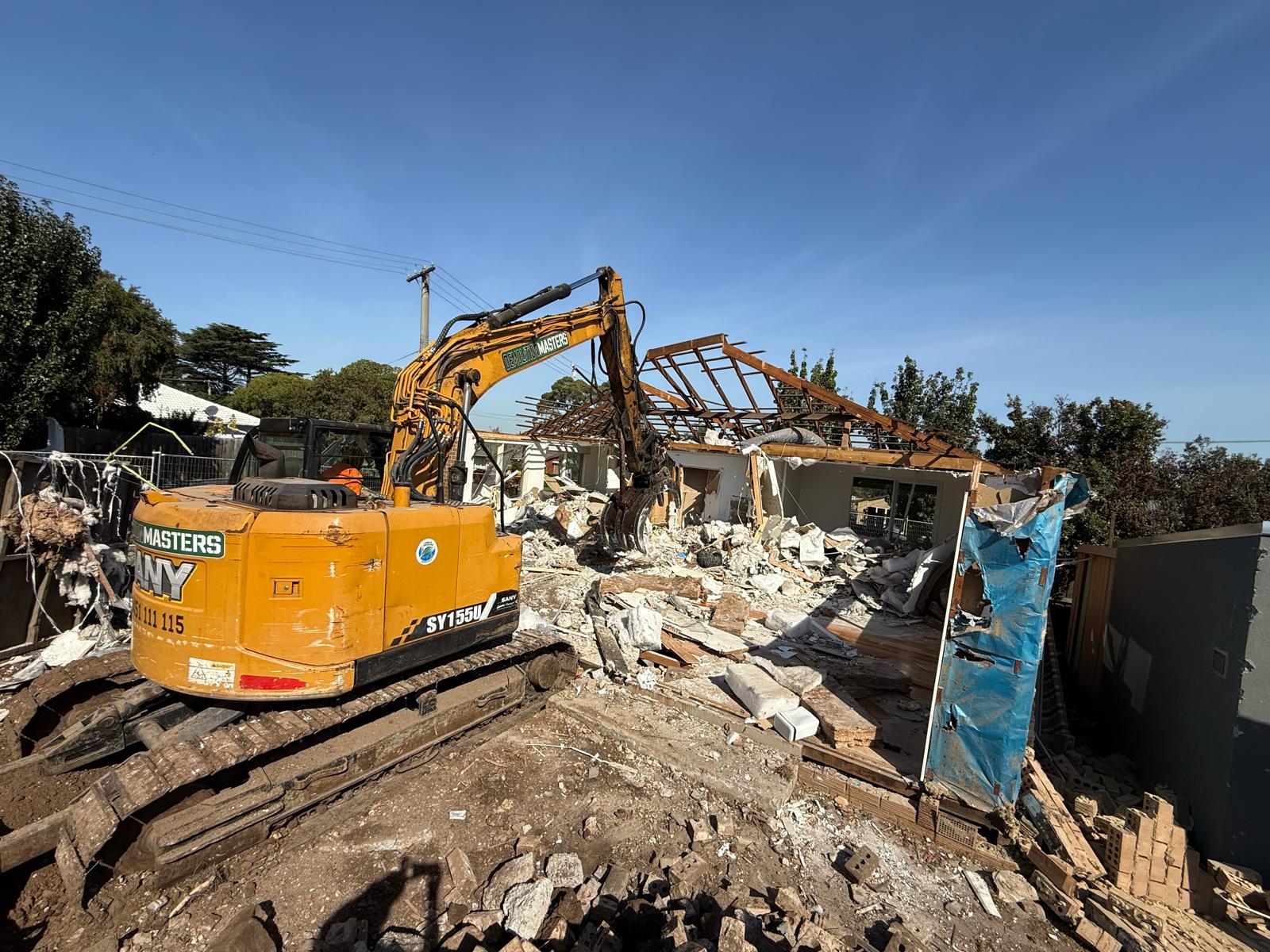
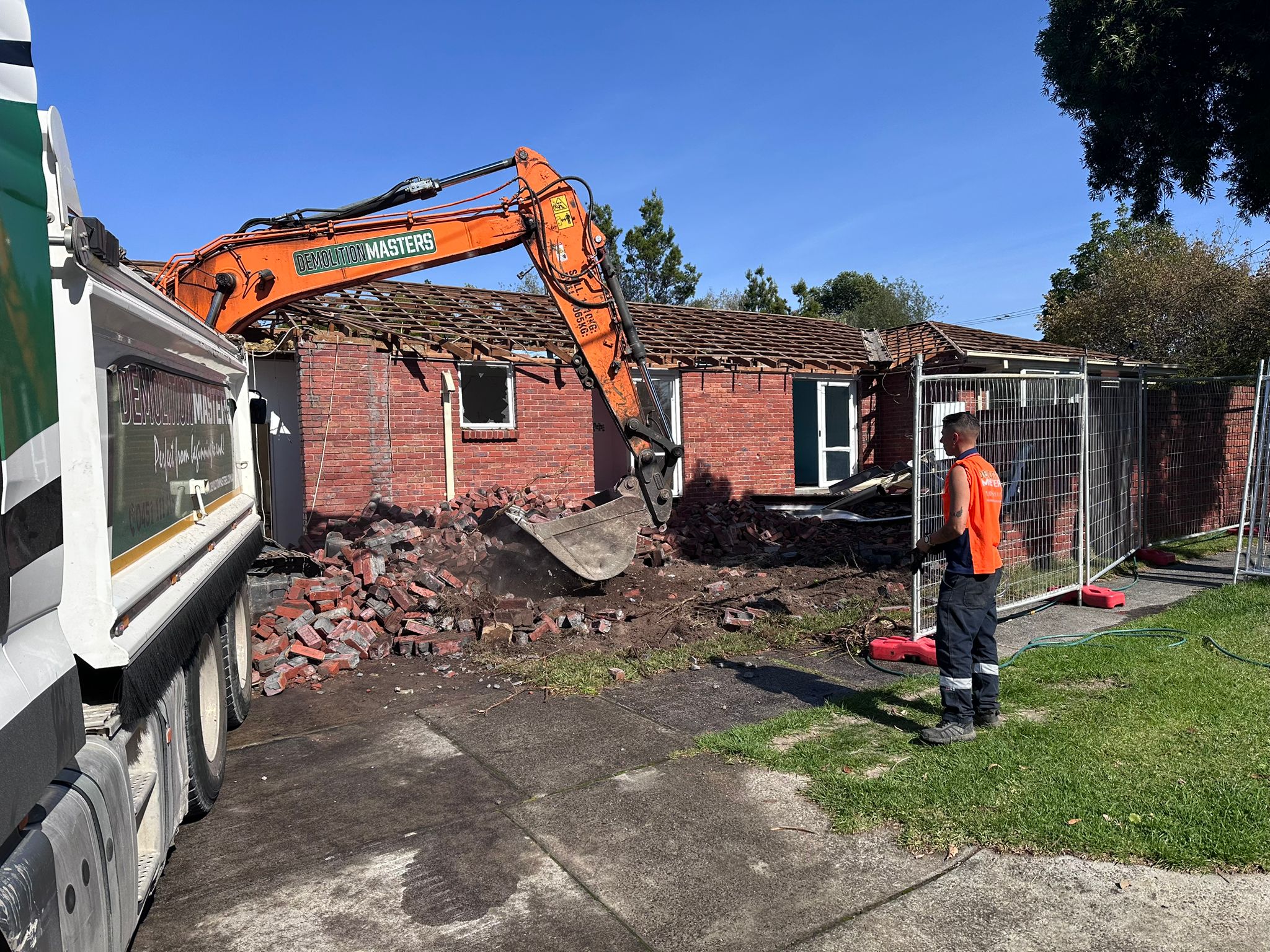
A genuine demolition quote is built from a site walk, not a phone call. When we drive out to look at a property before pricing, there are twelve things we are assessing — some obvious, some not. If the quote you have in front of you didn't involve someone walking your block and looking at every one of these, the number on the page is a guess, and the bill at the end will not match it.
The twelve checks before a number gets written
1. Building footprint and material
How big is the structure, what is it made of, how many storeys? Brick double-storey takes longer to bring down than weatherboard single-storey. The walls themselves and what holds them up dictate machine size and time on site.
2. Foundation type
Stumps, slab on ground, or full basement? Slab removal alone can add a day or two of machine time and several truck loads. Basements are a different conversation entirely.
3. Roof material
Tile roofs are slow and dusty to remove. Metal sheeting strips and recycles fast. Old fibre-cement (likely asbestos) needs a separate process. Each one prices differently.
4. Asbestos likelihood
Anything built before 1990 in Melbourne probably has it somewhere. We look at eaves, bathroom and laundry walls, vinyl floors, fence sheets, and the original construction era. Suspicion triggers a sampling survey before any pricing is locked in.
5. Side and rear access
Can a 14-tonne excavator drive in, or do we need a 5-tonne mini? Is there a rear lane, or do all trucks reverse out the front? Side passage width often dictates which class of machine, which dictates timeline.
6. Truck rotation logistics
Where does the spoil truck park? How many can stage at once? On a tight street with no driveway, we may stage off-site and rotate one truck at a time, which slows things and adds day count.
7. Adjoining structures
Is there a shared boundary wall? A heritage facade to retain? A neighbour's garage built on the line? Adjacent structures change everything about how we sequence the work.
8. Trees and protected vegetation
Is there a Significant Tree Register entry? Council-protected vegetation? Even one large tree on the boundary can require a tree protection zone and an arborist's sign-off, both of which carry cost and time.
9. Services on site
Gas, water, electricity, sewer, stormwater, NBN. Each has its own disconnection process, lead time, and certification. We coordinate but the homeowner usually owns the disconnection arrangements.
10. Pool, paving, and outbuildings
Concrete driveways, garden walls, sheds, garages, swimming pools, retaining walls — every extra element is priced separately. Pools in particular can swing the total by thousands depending on construction and access.
11. Council and overlays
Heritage overlay? Vegetation Protection Overlay? Significant Landscape Overlay? Any planning permit requirements? Some of this affects what's allowed, some affects cost, and some affects timeline. We cover the detail in our Victoria permit guide.
12. Final site condition
What does the homeowner or builder actually want at handover? Slab broken and removed? Site levelled to engineer's spec? Footings exposed? "Cleared" can mean six different things, and the difference between the cheapest and most thorough version of clearing is real money.
What a real site walk looks like
It usually takes about thirty to forty-five minutes. We walk the perimeter inside and out, look in the roof space if access is safe, photograph anything questionable, measure the side passage, check sightlines from the street, and ask about timelines. We will often want to see council records or permit packs if the homeowner has them. By the end we have enough information to price the job within a fixed-price envelope, and to flag anything that needs a survey before we can lock the number in.
Phone quotes that quote a low headline number and add "subject to site inspection" in the fine print are setting up a re-price. The site inspection should come first.
What's not visible from a site walk
Three things almost always need a follow-up before pricing locks in:
- Asbestos — if any is suspected, a licensed assessor takes samples before the quote is final. Read more.
- Geotechnical conditions — soft fill, contaminated soil, or unexpected basements only show up once excavation begins. We allow contingency in the quote when warranted.
- Council requirements — bond amounts and overlay conditions can take a week or more to confirm. We start the conversation during quoting so there are no surprises.
Why "subject to site inspection" should be rare in your final quote
A fixed-price quote should genuinely be fixed for the scope as stated. Variations should only occur when something genuinely unforeseen is uncovered — a buried oil tank, a slab thicker than the previous owner's plans showed, an asbestos area not included in the original survey. A quote stuffed with "subject to" clauses is not a quote, it's a budget estimate dressed up.
The right way: clear scope, clear price, named exclusions. Anything outside the scope becomes a written variation before work proceeds. We cover the most common surprises here.
Bring this list to your next quote
If you're getting demolition quotes for a Melbourne property, ask each contractor whether they have walked the site and whether they have addressed the twelve items above. The answers will tell you very quickly which quote you should trust.