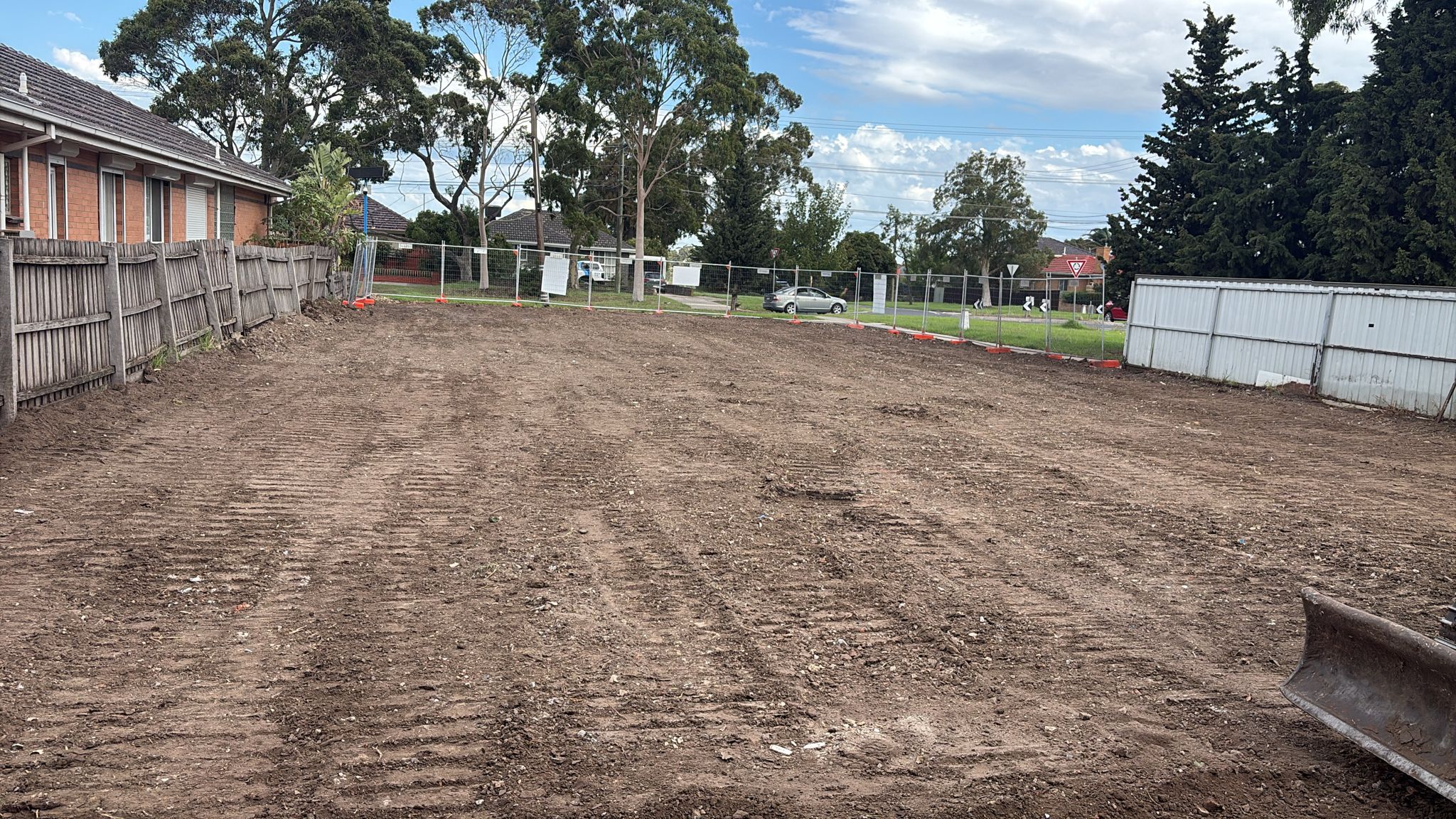
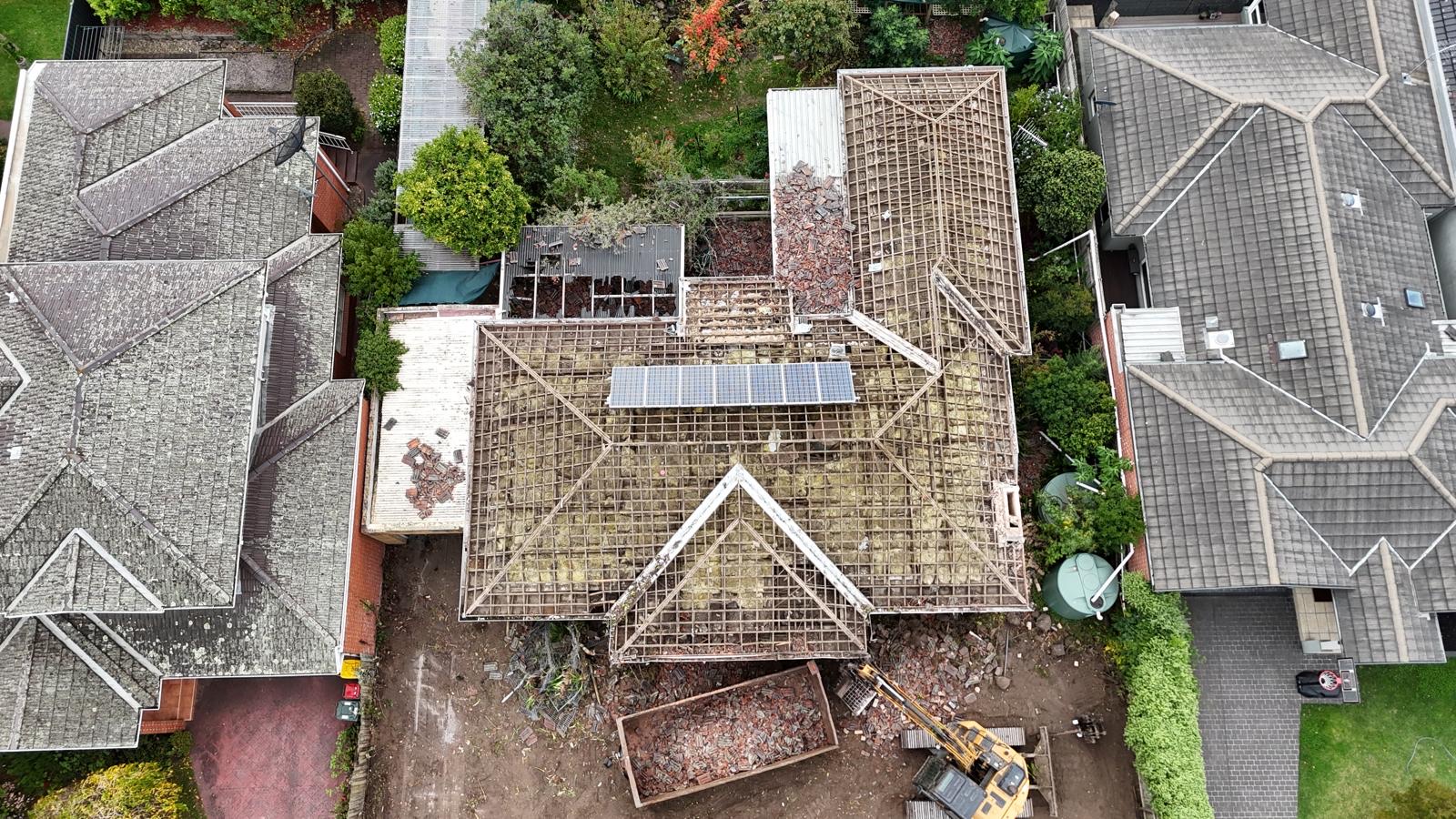
"We'll leave it rebuild-ready" is one of the most common phrases on a demolition quote, and one of the least defined. To one contractor it means a flat, clean piece of dirt. To another it means slab broken, footings exposed, soft fill removed, and the surveyor's pegs preserved. The difference between the two on handover day is the difference between starting your build on Monday and waiting two more weeks while someone else fixes what was missed.
What "rebuild-ready" should mean
A truly rebuild-ready site at handover should meet all seven of these conditions:
1. All structures fully removed
The home, outbuildings, fences (where included in scope), driveways, paving, and any concrete pads. Nothing protruding above the cleared ground level.
2. Slab and footings removed
The original slab broken up and removed. Footings dug out and disposed of. Old plumbing trenches cleared. Anything a builder's slab pour would have to sit on top of is gone.
3. Site graded to engineer's specification
For most knockdown rebuilds, the engineer specifies a finish level — typically natural ground level minus a small amount, with a defined tolerance. The site should be levelled to this spec, not just "roughly flat."
4. Services capped at the boundary or specified location
Sewer cap visible and accessible. Stormwater cap visible. Water service cap visible. Power point of supply marked. Gas service abolished and capped at the main where required. Each cap should be at the location the next builder needs it.
5. Soft fill and contamination removed
Old plumbing trenches, demolished slab fragments, organic matter from gardens, old stump fill — all removed and replaced with compactable fill where required. Soft fill underneath a slab is the single most common cause of post-build settling.
6. Survey pegs and reference points preserved
If a surveyor placed boundary pegs or reference marks, they should still be in place at handover. The next builder uses these to set out the new home.
7. Final clearance certificates issued
Asbestos clearance certificate from a licensed assessor (where applicable). Asset protection bond inspection cleared (so the council refunds it). Contractor's final invoice marked paid in full only after walk-through.
What "cleared" usually means without specifics
Without these conditions written in, "cleared" can mean:
- Building knocked down, slab still in place
- Slab broken but pieces still on site
- Old footings still buried 600mm down
- Soft fill from collapsed trenches sitting where the new slab needs to be
- Services capped somewhere — but maybe not where the new home's plumbing comes in
The next builder discovers each of these on day one of their work, and the homeowner pays someone to fix it. Cost-of-vague-handover detail here.
The handover condition should be a numbered list in your demolition contract, not a single phrase. If your quote says "site left clear and rebuild-ready" with no further definition, ask for the seven items above to be specified.
The handover walk-through
Good contractors walk the site with you on the final day. Bring a copy of the contract handover spec. Walk the perimeter, then the centre. For each of the seven items above, look for it physically:
- Slab and footings — kick at any suspicious soft spots; ask if there are any locations where original footings remain
- Levels — eyeball it for major slopes; ask for the surveyor's level confirmation if specified
- Service caps — find each one. They should be visible at ground level, not buried.
- Soft fill — walk old plumbing trench locations. They should be backfilled solidly.
- Survey pegs — confirm they are visible at the boundaries
- Certificates — receive paper copies on the day, not "we'll email them later"
- Site cleanliness — no fragments, no scrap, no rubbish
What to do if something is missing
Don't sign the handover form. The handover is your last point of leverage; once it is signed, the contractor's contract obligation is complete. If something is missing or substandard, write it down on the spot, list the rectification items, and agree a date for completion. Sign the handover only when those items are done.
This is rarely a confrontation with a good contractor — they will identify the missing item themselves and arrange the fix. A bad contractor will pressure you to sign with promises that "we'll come back next week." Don't.
Coordinating with your builder
If your demolition is the first stage of a knockdown rebuild, ask your builder what they need at handover specifically. Some builders want the site fully levelled; others prefer the existing topsoil left in place because they will excavate again for the slab. The demolition contractor needs to know your builder's preference before they finish.
Builder coordination at handover prevents the most common knockdown rebuild problem: the demolition is "complete," the builder arrives a week later, and discovers the site isn't quite what they needed. Demolition-build coordination.
What "rebuild-ready" looks like — the short version
If you walked onto the site as a builder you've never met, with the engineering plan in your hand, you should be able to start work immediately. No surprises buried 600mm down. No services in the wrong place. No old slab fragments under the new slab footprint. No rubbish. No paperwork chasing.
That's the standard. If your contract doesn't deliver that, the words "rebuild-ready" don't mean much.