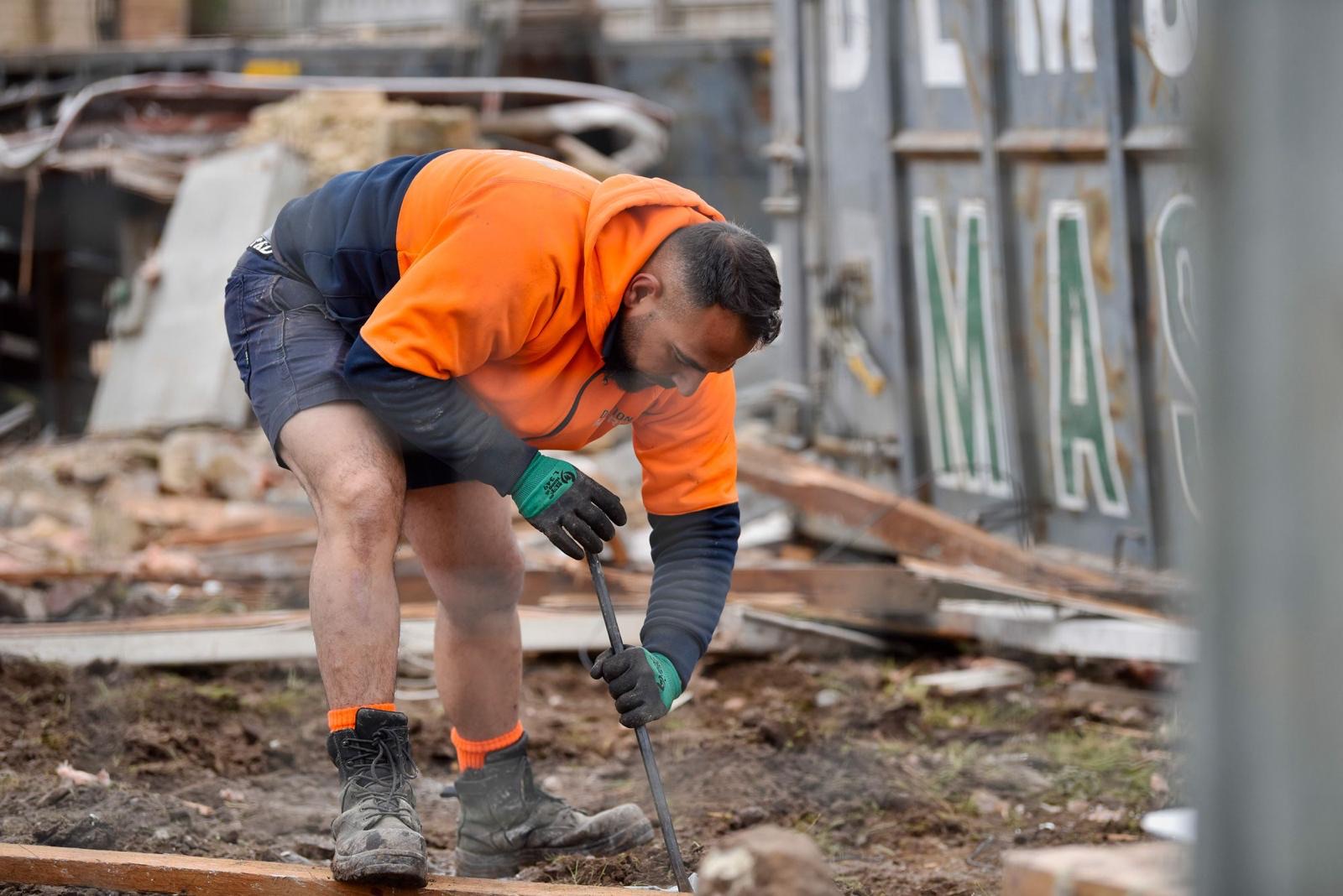
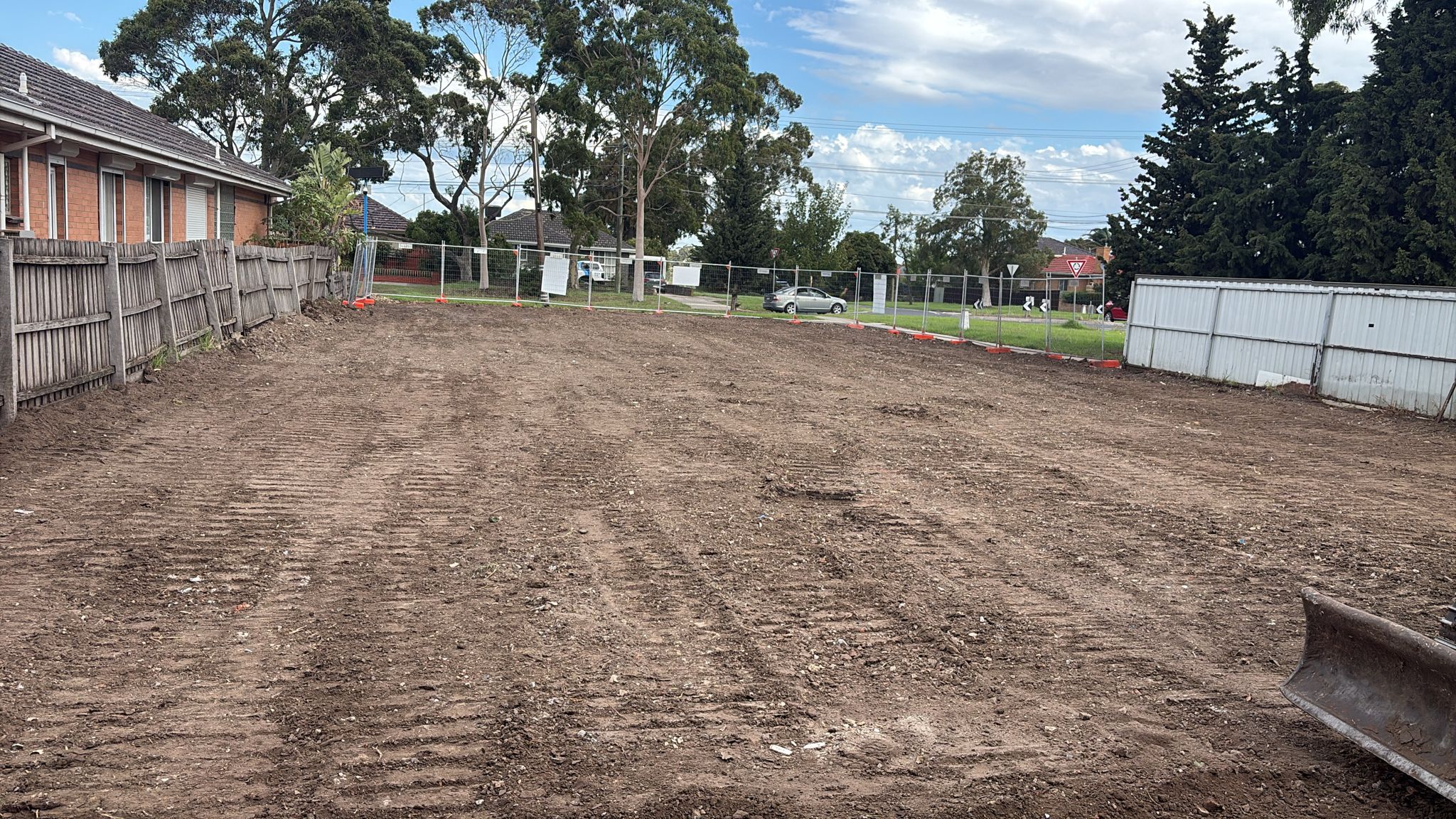
Most of the time you spend demolishing a house in Melbourne is not spent demolishing. The actual machine-on-site work is a small slice of the total project — typically 3–10 working days. The other six to twelve weeks are permits, paperwork, asbestos surveys, service disconnections, and handover. Here is the realistic timeline.
The two timelines
It helps to separate two different questions:
- How long from contract to handover? Usually 6–12 weeks.
- How long are crews actually on site? Usually 3–14 working days.
The first one matters for builder coordination. The second one matters for noise, neighbour relations, and disruption.
Pre-demolition phase — usually 4–7 weeks
Permits (2–4 weeks)
A demolition building permit issued by a private surveyor takes 2–4 weeks. If a planning permit is also required (for example, due to heritage overlay), add 4–12 weeks on top. Permit detail here.
Asbestos survey (1 week)
A licensed assessor takes samples and the lab returns results in around five business days. Required for almost all pre-1990 Melbourne homes.
Service disconnections (3–6 weeks)
Each utility provider has its own timeline:
- Electricity disconnection: 2–4 weeks
- Gas abolishment (full removal of meter and service): 4–6 weeks
- Water disconnection: 1–2 weeks
- Sewer cap-off: 1–2 weeks
- NBN/telecom: 1–2 weeks
Gas is almost always the bottleneck. Start early.
Asset protection bond (1–2 weeks)
Most councils require a refundable bond before demolition. Lodgement is usually quick once the form is in.
On-site demolition — actual machine days
Once everything is in place, the machines move in. Realistic working-day estimates for the structural demolition:
| Property | Days on site |
|---|---|
| Single-storey weatherboard | 2–3 days |
| Single-storey brick veneer | 3–5 days |
| Double-storey brick veneer | 5–7 days |
| Double-storey solid brick | 6–9 days |
| Heritage / facade retention | 10–20 days |
| Tight inner-city access | +30–50% time |
| Heavy asbestos load | +3–5 days for soft strip |
Why two demolitions of similar size take very different time
Five common multipliers:
Side passage width
A 14-tonne excavator can clear a single-storey home in 2 days. A 5-tonne mini, used because the side passage is narrow, takes 4–5 days for the same building. Narrow lot techniques.
Truck rotation
A site that can stage two trucks at once moves twice the volume per hour as a site that can only fit one. Front-only access in tight streets often means single-truck rotation.
Asbestos load
Bonded asbestos in eaves and bathroom adds a day to soft strip. Friable (Class A) material adds significantly more — full containment, negative-pressure enclosures, and clearance certificates between stages.
Slab thickness and reinforcement
Some older slabs are surprisingly thick. Others have heavy reinforcement, multiple repair layers, or buried plumbing. What looks like a half-day slab break can become two days.
Adjoining structures
Demolishing back-to-front to protect a retained facade, or working carefully along a shared boundary wall, slows the pace deliberately. This is a feature, not a bug — but it lengthens the calendar.
If your demolition is timed against a builder's slab pour, build in 1–2 weeks of buffer. Permits can stretch, weather days happen, and asbestos surprises occur. A buffer is cheaper than a slab pour reschedule.
What can the homeowner do to speed things up?
The contractor controls most of the timeline, but the homeowner has three meaningful levers:
- Start service disconnections immediately on signing. Don't wait for the permit to come through. Gas in particular has the longest lead time.
- Get the asbestos sampling done early. Even before the contract is signed if possible — it removes the biggest source of mid-job variation.
- Be reachable. Permits, council questions, and bond paperwork sometimes need a quick yes from the homeowner. A 24-hour response saves three days; a week-long delay can add two weeks.
Weather and Melbourne winters
Demolition continues through Melbourne winters with one major caveat: heavy rain pauses the work. Wet sites are unsafe for tracked machines on tight ground, and dust suppression becomes mud suppression. A typical Melbourne winter project loses 1–3 days to weather. Build that into your plan.
Holiday windows
If your project runs through Christmas, expect a closure of 2–3 weeks across most contractors and council offices. Easter and the Australia Day long weekend each cost a few days. Plan around them or accept the extension.
Total realistic timing
A clean, simple, single-storey suburban demolition from signed contract to handover: 6–8 weeks. A complex, heritage-overlay, double-storey project: 12–16 weeks. Builder-coordinated knockdown rebuilds: read the integration timing here.
Anyone quoting "we'll have it done in two weeks" is either describing the on-site work only, or is missing significant pre-demolition steps. Ask which one they mean.