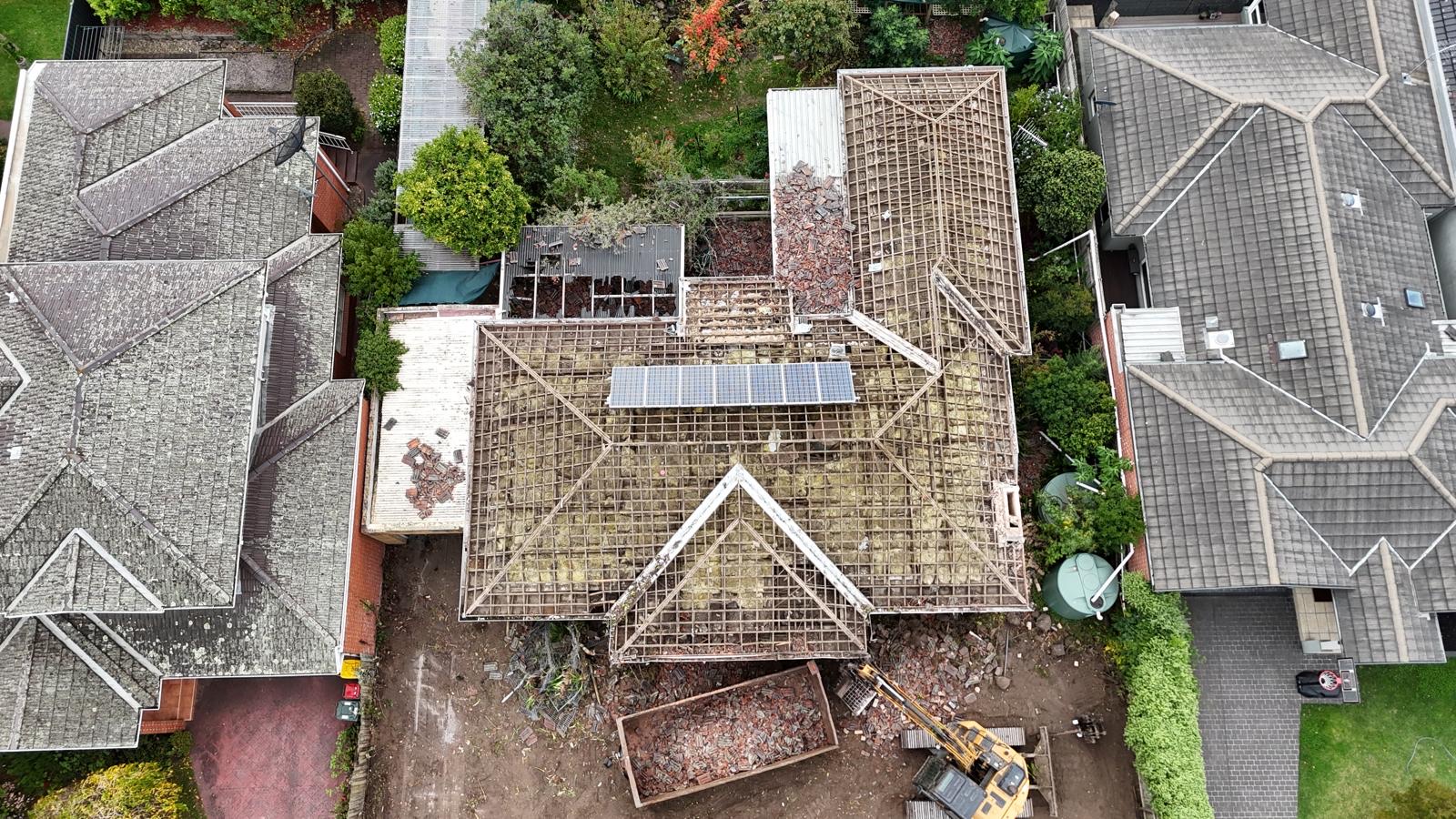
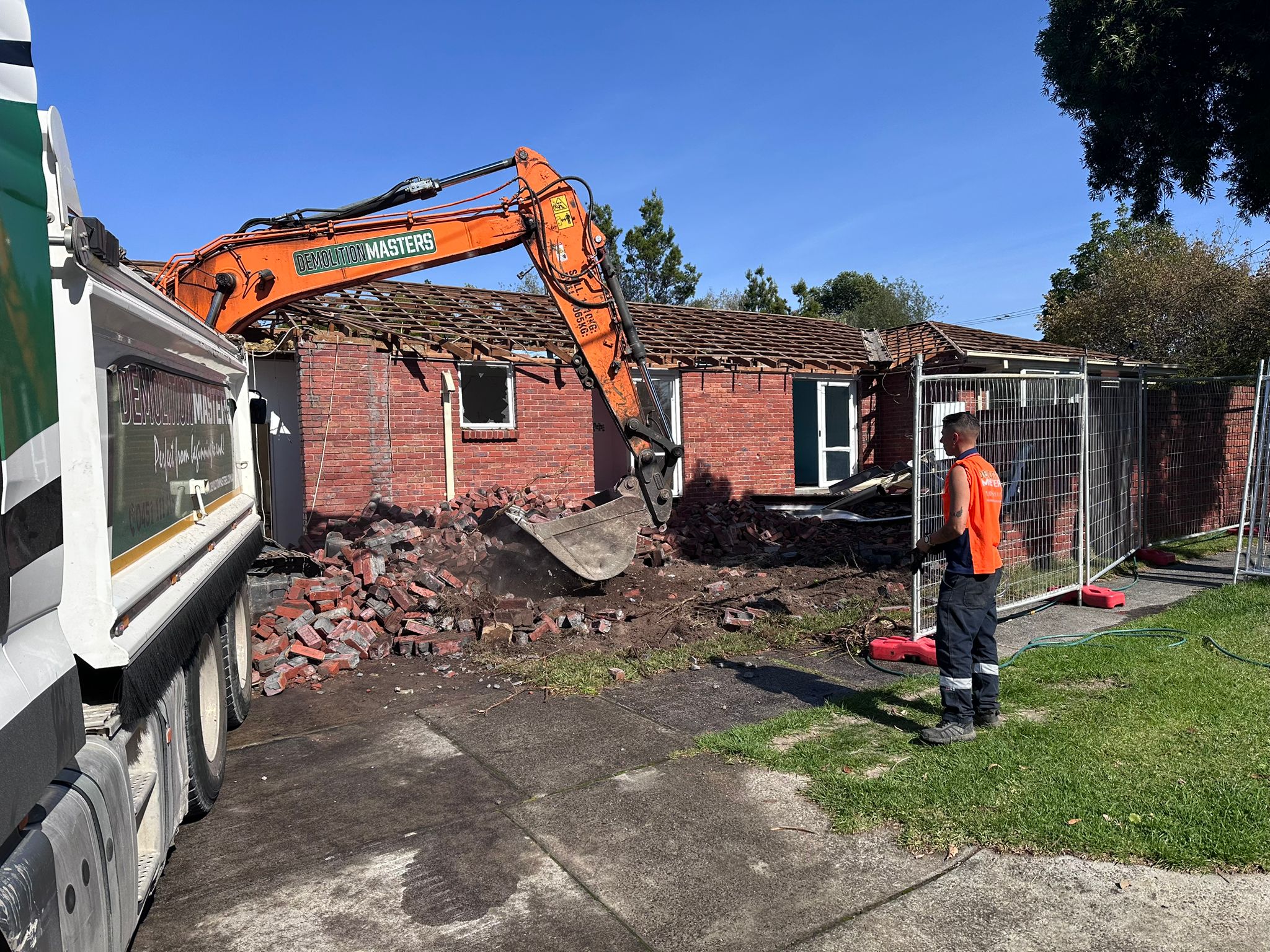
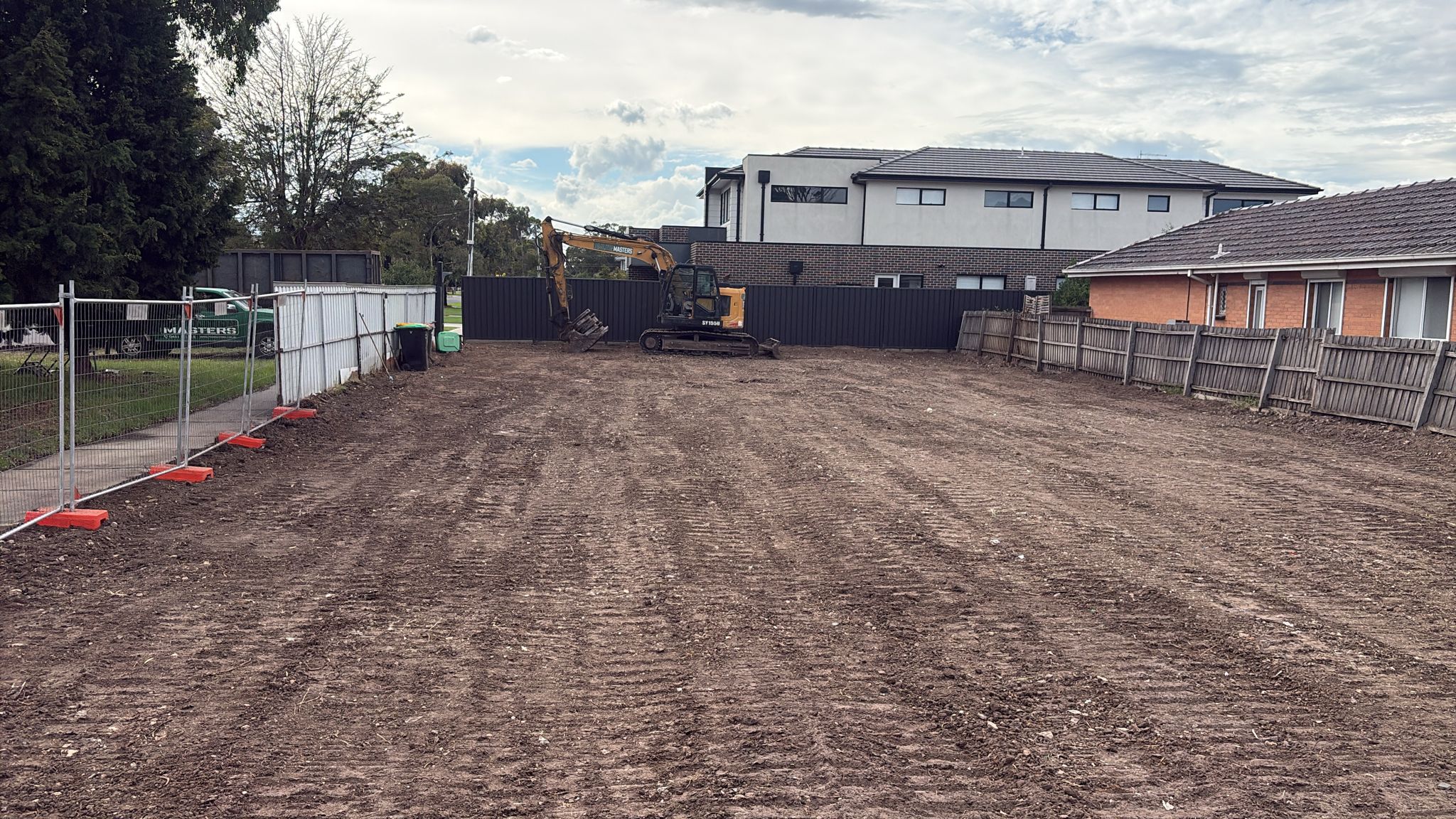
The honest answer to "how much does it cost to demolish a house in Melbourne" is that there is no flat number. A single-storey weatherboard on a flat suburban block runs very differently from a brick double-storey with asbestos eaves and a one-metre side passage. What we can give you is a clear picture of what drives the price, what a reasonable quote looks like in 2026, and where homeowners get caught out by the difference between the cheapest quote and the cheapest job.
Typical 2026 price ranges
For a residential demolition across greater Melbourne, current pricing tends to land in these bands:
| Property | Typical Range (incl. GST) |
|---|---|
| Single-storey weatherboard, standard lot | $15,000 – $22,000 |
| Single-storey brick veneer, standard lot | $18,000 – $28,000 |
| Double-storey brick, standard lot | $25,000 – $40,000 |
| Heritage / partial demolition | $22,000 – $55,000+ |
| Tight inner-city, narrow access | +$4,000 – $10,000 surcharge |
These are representative bands, not quotes. The variation between two quotes for the same property can be ten thousand dollars or more depending on what the contractor has actually surveyed. Anyone who quotes you a residential demolition over the phone without walking the site is guessing.
What actually drives the price
Six factors explain almost all of the variance between quotes:
1. Building material and structure
Weatherboard demolishes faster than brick. Double-brick double-storey takes longer than brick veneer. Slab-on-ground is harder to remove than a stumped subfloor. Any contractor pricing without seeing the actual building is missing the single biggest cost driver.
2. Asbestos
If your home was built or renovated before about 1990, there is a high chance of asbestos somewhere — bathroom sheeting, eaves, vinyl floor backing, fence sheets. Bonded asbestos (Class B) is cheaper to remove than friable (Class A), but both add real cost. A licensed survey before quoting is non-negotiable. We cover the detail in our asbestos removal guide.
3. Site access
How wide is the side passage? Is there a rear lane? Where will trucks turn? Tight inner-city lots often need a smaller excavator and more truck trips, which adds days. We cover the techniques in our narrow-lot demolition article.
4. Permits and bonds
Building permit, asset protection bond, asbestos notification, and where applicable a planning permit all carry real costs. Some sit with the contractor, some with the homeowner. Permit requirements vary and the timeline matters as much as the dollar figure.
5. Site features
Concrete driveways, paving, swimming pools, sheds, mature trees with protection orders — every additional element on the block has a price. Pools alone can add three to eight thousand dollars depending on size and access.
6. Disposal and recycling
Tip fees in Victoria have climbed steadily. A demolition that recycles 80%+ of the building costs the contractor less in tip fees, which means a sharper quote for you. The cheapest quote isn't always from the most environmentally responsible contractor — sometimes it's the opposite, with the difference recovered through skip surcharges later.
If the quote you have in front of you doesn't list permits, asbestos handling, and tip fees as separate line items, you don't have a fixed-price quote. You have an opening offer.
What a fair Melbourne quote includes
A quote that protects you should be in writing and include, at minimum:
- Scope of works — what is being demolished, what is being retained
- Permit responsibilities — who applies, who pays
- Asset protection bond handling and refund process
- Asbestos survey result and removal scope (Class A and B)
- Services disconnection coordination (gas, water, electricity, NBN)
- Site protection — fencing, dust suppression, hoarding if applicable
- Final clearance condition — what "rebuild-ready" actually means
- Programme — start date and expected duration in working days
- Insurance certificates available on request
- Payment schedule (deposit, progress, final)
If any of these are missing, ask. A good contractor will be happy to add them. A bad one will tell you "it's all included" and leave it ambiguous.
Why two quotes for the same job differ by ten thousand dollars
The most common reasons:
- One contractor included an asbestos survey, the other assumed there is none
- One included asset protection bond and council notifications, the other excluded them
- One priced for proper site fencing and dust suppression, the other left it off
- One walked the site and saw the slab, the other assumed timber stumps
- One has its own truck fleet, the other will sub-contract and add a margin
The cheaper quote isn't necessarily worse — but the gap usually means a different scope, not a better deal. Read both quotes line by line before deciding.
Knockdown rebuild integration
If your demolition is part of a knockdown rebuild, the demolition portion is typically priced separately from the build contract. Builders often have a preferred demolition contractor, but you are not obligated to use them. Getting an independent quote for comparison usually pays for itself. We have a dedicated guide on knockdown rebuild demolition costs.
The bottom line
A reasonable, all-in residential demolition in Melbourne in 2026 sits between $15,000 and $40,000 for the great majority of homes. Anything dramatically below that range is either missing scope or relying on the homeowner to absorb costs after the fact. Anything dramatically above usually reflects significant complexity — heritage, asbestos, tight access, or large lots — and should be explainable line by line.
Get two or three quotes from licensed contractors who have walked your block. Read every line. Ask about the items not listed. The right contractor will welcome the questions; the wrong one will get defensive.