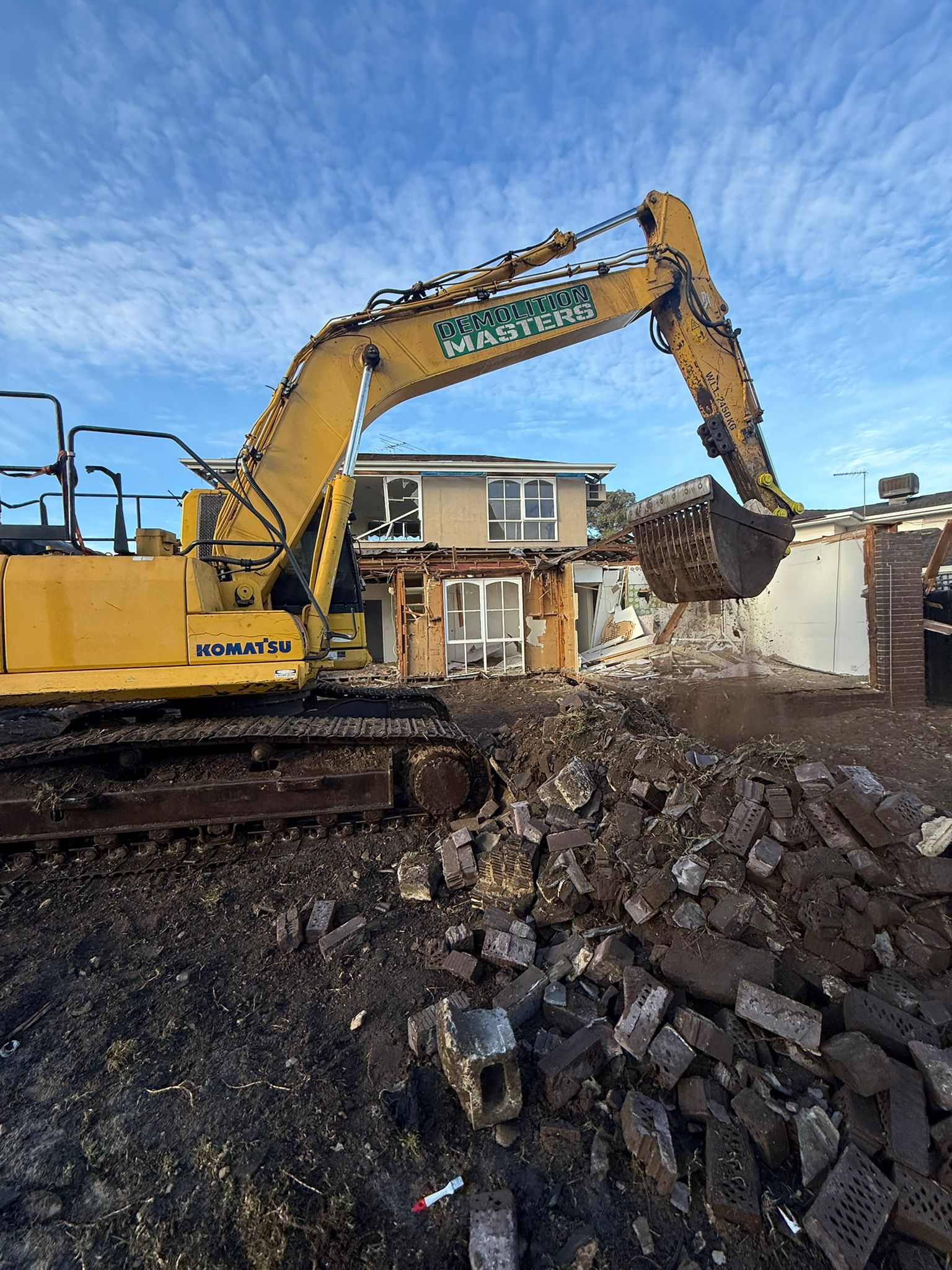
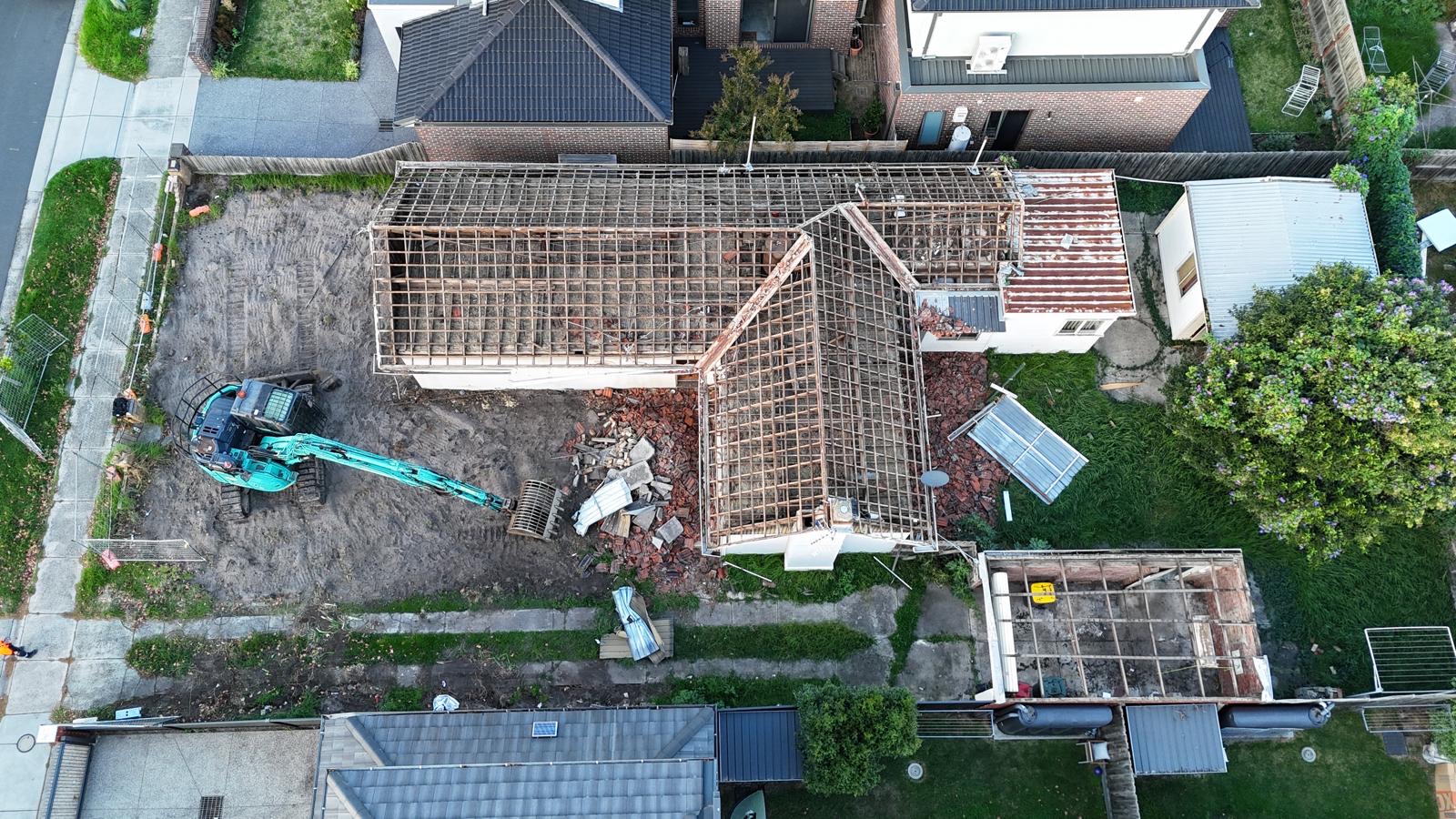
By the time the demolition crew arrives on site, the homeowner has work that needs to have been done already — utilities disconnected, valuables moved out, neighbours notified, paperwork in order. Skipping any of these is the most common reason a project starts a day late and stays a day late through the rest of the schedule. Here is the thirteen-item checklist for the week before demolition begins.
Three weeks before
1. Lodge service disconnection requests
This is the longest lead-time item. Each provider works to its own schedule:
- Gas — request abolishment, not just disconnection. Allow 4–6 weeks.
- Electricity — disconnection request to your retailer, allow 2–4 weeks.
- Water — to your water authority, allow 1–2 weeks.
- Sewer — to your water authority, allow 1–2 weeks.
- NBN/telecom — to your provider, allow 1–2 weeks.
The contractor needs evidence each service is dead before the machines start. Without it, demolition cannot proceed safely or legally.
2. Confirm asbestos survey complete
The licensed assessor's report should be in the contractor's hands by now. Surprises late in the process cost real money. Asbestos detail here.
3. Lodge asset protection bond
The contractor usually handles this, but confirm it is paid and the council has issued the receipt. No bond, no demolition.
Two weeks before
4. Notify direct neighbours
Knock on the doors of every property that shares a boundary, plus those across the street. Hand them a written note with your contractor's name, your contact number, the start date, and the expected duration. This single step prevents 80% of complaints.
5. Move out and remove all possessions
Anything still in the house on day one is gone forever, including items you forgot in the roof space, garage, or shed. Walk through every room, every cupboard, every drawer.
6. Remove anything you want to retain
Heritage features, fixtures, fittings, light switches, mantels, cast iron radiators — if you want any of it salvaged, take it before demolition starts or arrange a pre-strip with the contractor specifically. Once the demolition machine moves in, nothing comes back out usable.
One week before
7. Confirm pets and protected items at neighbours' properties
If your immediate neighbour has a particularly sensitive dog, a chicken coop, or a glasshouse against the boundary, talk to them directly. Sometimes the contractor schedules the noisiest day of work for when the neighbour's animals are at a kennel. Small courtesies prevent big problems.
8. Permit pack on site
The building permit, asbestos clearance certificate, and asset protection bond receipt should all be physically present in the site shed on day one. WorkSafe inspectors do random spot-checks; missing paperwork stops the job.
9. Confirm site access for trucks
Where will the demolition truck park? Is street access clear of rubbish bins? Are temporary parking arrangements made with the council if the truck blocks a footpath? The contractor knows the requirements but may need your confirmation that adjacent properties are clear.
Cancel any auto-deliveries to the address — milk, papers, food kits, online shopping. Update the property address on Australia Post mail forwarding. The site is not a delivery destination once demolition starts.
The day before
10. Final walk-through
One last walk through the house. Roof space, under the floor (if accessible), behind the bath, top shelves of wardrobes. Check the garage and any sheds. Once you walk out and lock the door, that's it.
11. Photographs of adjoining properties
This is rarely mentioned but valuable. Take photos of fences, retaining walls, neighbours' driveways, and any boundary features before demolition starts. If a neighbour later claims damage was caused by the demolition, the photos settle it quickly.
12. Contractor confirmation
Speak to your contractor's site supervisor by phone the day before. Confirm start time, your availability, and whether anything has changed. A two-minute call prevents a missed start.
Day one
13. Be off-site, but reachable
Don't be on site during the demolition unless the contractor specifically requests it. The site is a high-risk construction zone — limited PPE, heavy machinery, dust, and falling material. Be reachable by phone in case anything needs your sign-off.
What if something can't be done in time?
Tell the contractor immediately. The two most common late-stage problems:
- Gas not abolished in time — the demolition will have to be pushed by a week. Talk to the contractor as soon as you know.
- Asbestos report not complete — the demolition cannot start. Survey results take a week from sampling.
Both of these are recoverable if flagged early. Both turn into multi-thousand-dollar variations if discovered on day one.
After demolition starts
The homeowner's job between day one and handover is mostly to stay clear. The contractor will be in touch if anything needs your sign-off — typically a permit query, an unforeseen item discovered on site, or a programme update. Otherwise, the next major touchpoint is the handover walk-through. What to look for at handover.
Print this checklist
Save or print this list and tick items off as you go. Three to four weeks ahead of your start date is the right time to begin. Earlier is better than later — service disconnections, in particular, won't speed up because you ask nicely.