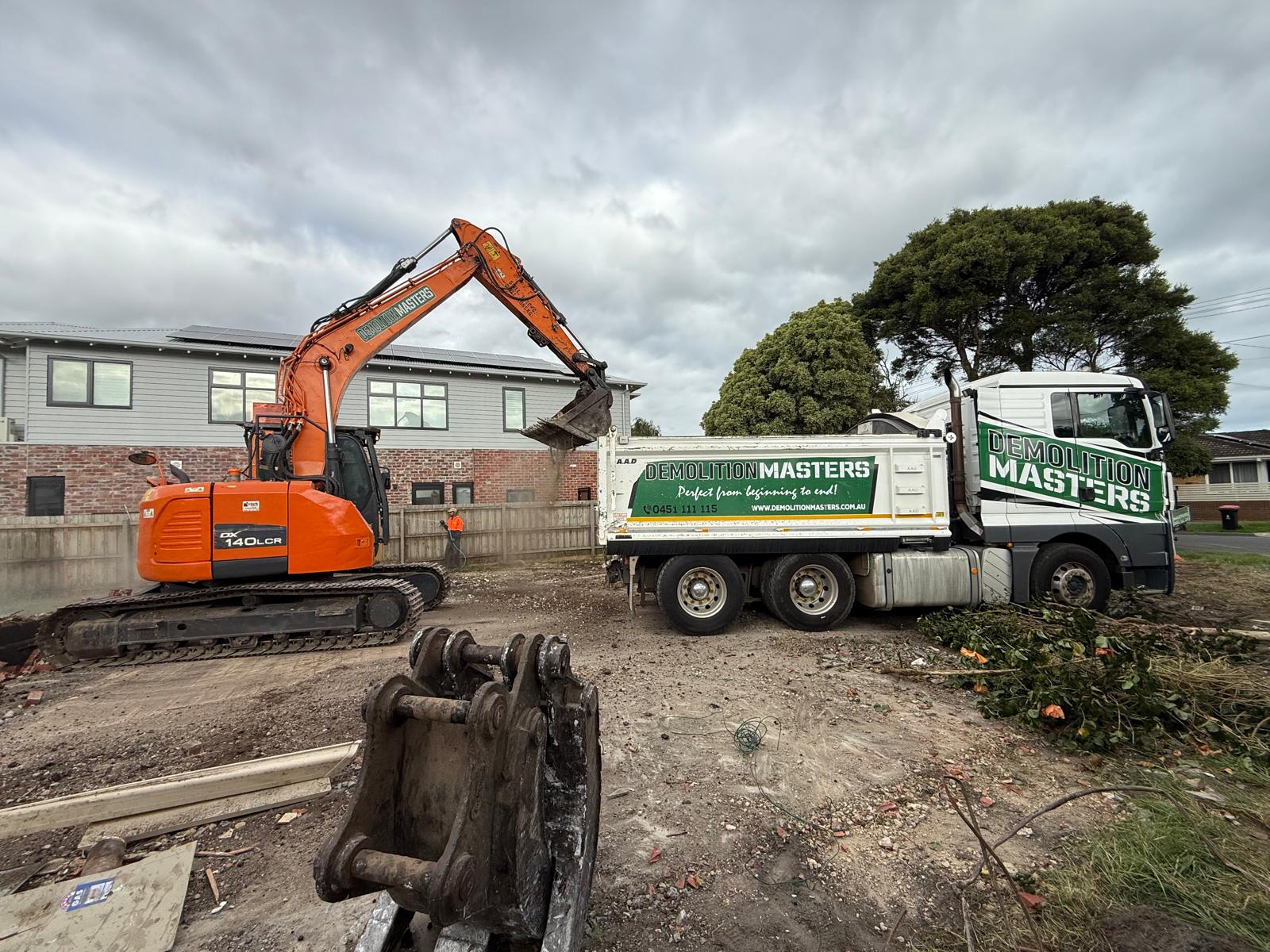
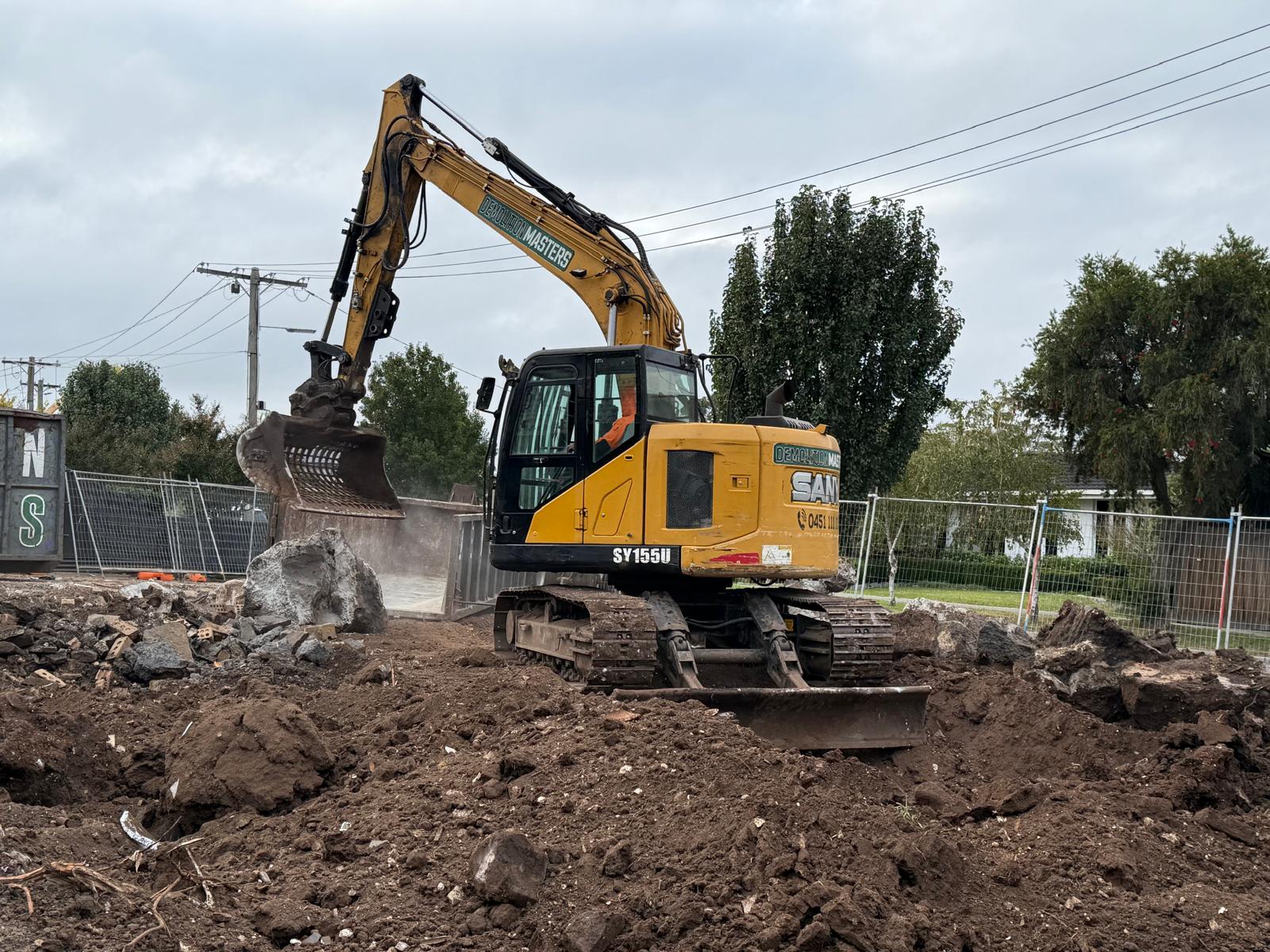
Demolition is classified as High-Risk Construction Work in Victoria, which means it sits inside one of WorkSafe's most heavily regulated categories. For homeowners, that's a good thing — the rules exist because demolition can hurt people, damage neighbouring property, and contaminate the surrounding environment if done badly. Here is a plain-English summary of the regulations and what they mean for the homeowner.
The legislation
Demolition in Victoria is governed by:
- Occupational Health and Safety Act 2004 — general workplace safety duties
- OHS Regulations 2017 — specific construction and demolition provisions
- Compliance Code: Demolition — WorkSafe's published guidance on how to comply
- Building Act 1993 / Building Regulations — building permit and engineering requirements
- Environment Protection Act — waste, dust, noise, contamination
Layered on top: the Asbestos Regulations (under OHS), the Local Government Act provisions, and individual council by-laws on hours of work, hoarding, dust, and signage.
What "high-risk construction work" means
The OHS Regulations specifically classify as high-risk construction work:
- Demolition of any structural element of a load-bearing structure
- Work involving asbestos disturbance
- Work in or near excavations deeper than 1.5 metres
- Work that could result in a person falling more than 2 metres
- Use of explosives (uncommon in residential demolition)
- Work near energised electrical services
- Work near pressurised gas mains
Any project meeting any of those triggers requires a written Safe Work Method Statement (SWMS) before work starts. Demolition projects almost always trigger several at once.
The Safe Work Method Statement (SWMS)
A SWMS describes:
- The high-risk activities being performed
- The hazards associated with each
- The control measures being applied
- How the controls will be implemented and monitored
The contractor's site supervisor must have the SWMS on site, must brief the crew on it, and must be able to produce it if a WorkSafe inspector arrives. SWMS documents that exist only on paper but aren't actually being followed are one of the most common compliance failures.
Notifications to WorkSafe
Two notifications are commonly required for demolition:
Construction site notification
Construction projects with a value above a defined threshold (currently around $250,000 including labour and materials) must be notified to WorkSafe before work starts. Most residential demolitions don't trigger this; commercial often do.
Asbestos removal notification
Class B asbestos removal exceeding 10 m², or any Class A friable removal, must be notified to WorkSafe at least 5 working days before removal starts. Notification is the licensed asbestos removalist's responsibility. Asbestos removal detail here.
Site supervision
Every demolition site requires a competent person nominated as the site supervisor. They must:
- Be physically on site during demolition activity
- Have appropriate training and experience for demolition supervision
- Have authority to stop unsafe work
- Maintain the SWMS, registers, and inspection records
If you ever turn up to a demolition site and can't find a supervisor in charge — every worker says "go ask the boss but he's not here" — that's a compliance failure and a real safety risk.
WorkSafe inspectors do unannounced visits to demolition sites. They check the SWMS, the registers, the PPE, the asbestos work zones, and the engineering plans. Compliant sites are uneventful; non-compliant sites get stop-work orders.
Personal protective equipment (PPE)
Standard demolition PPE on a Victoria site includes:
- High-visibility clothing
- Safety boots with steel cap and midsole
- Hard hat
- Safety glasses (clear or tinted)
- Gloves appropriate to task (cut-resistant, vibration, chemical)
- Hearing protection during machine operation
- P2 dust masks during dusty operations
- Asbestos-rated respirators in asbestos work zones
If you visit a demolition site without your own PPE, you should be denied entry. Compliant contractors will have spare PPE for visitors and will ensure it's worn.
What this means for the homeowner
You don't need to memorise these regulations — but you should expect any contractor you engage to be able to discuss them coherently. Three practical questions to ask:
- "Can you show me your SWMS for this job?" A real contractor will have a template they tailor for each project. They'll show it to you on request.
- "Who will be the named site supervisor?" Should be a specific person with relevant qualifications.
- "Can I see your latest WorkSafe inspection record or insurance certificates?" Reputable contractors keep these accessible.
If a contractor brushes off these questions or gets defensive, that's a sign they don't have proper compliance systems. Why licensing matters.
Fines and penalties
Demolition non-compliance penalties are significant:
- Failure to control asbestos: up to ~$385,000 for a corporation per offence
- Failure to provide a safe workplace: up to ~$3.8 million for industrial manslaughter
- Operating without required permits: separate building offence penalties
- Stop-work orders: project delay costs, often days or weeks
The financial risk is on the contractor, but a homeowner who hires an unlicensed crew can find themselves drawn into liability through duty-of-care provisions. Why this matters to you.
Hours of work and noise
WorkSafe regulations don't prescribe specific hours of demolition; council by-laws do. Most Melbourne councils restrict construction noise to:
- Monday–Friday: 7:00 am to 6:00 pm
- Saturday: 7:00 am or 9:00 am to 1:00 pm or 5:00 pm
- Sunday and public holidays: no work
Exact hours vary by council. Demolition outside these hours requires specific council approval. Inner-city commercial work sometimes operates after-hours under separate permits.
Compliance is the baseline, not the differentiator
WorkSafe compliance isn't something a contractor advertises proudly — it's the minimum standard for being in business. What separates good contractors from average ones is how they go beyond compliance: dust suppression that actually works, neighbour relations actively managed, site cleanliness through the day, and a programme that treats compliance as part of the job rather than overhead. Choosing a contractor.